

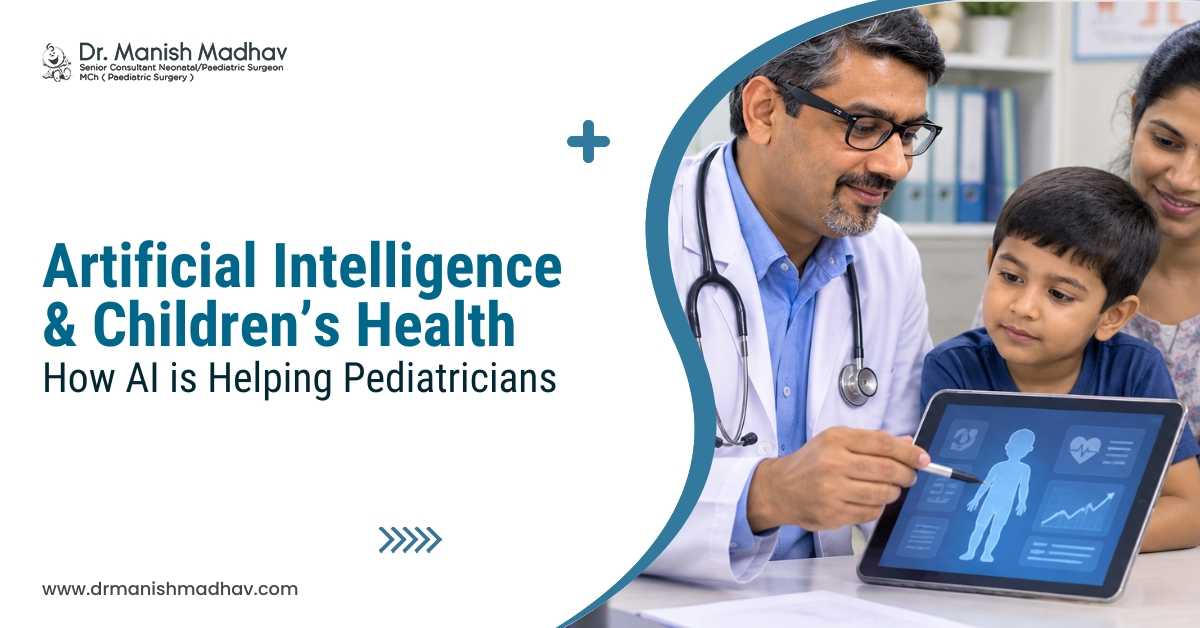

AI can serve as an additional pair of analytical eyes. Paediatrics is not an exception to the use of artificial intelligence (AI) entering from research labs into routine healthcare.
AI is providing doctors with new ways to understand complex child health information and make the right clinical decisions, from analysing test reports to detecting patterns in digital health records.
As kids age, their bodies, symptoms, development, and medical requirements change quickly. Because of this, pediatric care is especially delicate, which makes using Artificial Intelligence in Pediatric Healthcare responsibly both exciting and difficult.
AI in childcare is a growing tool for diagnosis, prognosis, individualized therapy, and clinical decision-making. Also, it will help with communication and workflow assistance, according to a recent study. However, pediatric data may be limited, and developmental differences might impact AI models' performance.
So, what potential effects might AI have on children's health in the future, and how specifically is it assisting paediatricians today?
What Is AI in Pediatric Healthcare?
In the child healthcare industry, artificial intelligence refers to computer systems that can analyse data, rule out patterns, produce helpful information, or help with certain therapeutic activities.
AI may be used in paediatrics with data like:
- Digital medical records
- Imaging tests
- Results from the laboratory
- Vital signs
- Details about medications
- Patient backgrounds
- Clinical observations
- Data on population health
Here, AI can serve as a clinical support device, assisting child specialists in processing information more quickly while delegating diagnosis, treatment choices, accountability, and communication to trained medical experts.
The World Health Organization (WHO) emphasizes that safety, equity, ethics, and proper governance must continue to be vital. At the same time, the WHO is acknowledging AI's promise to enhance diagnosis, clinical treatment, research, medication development, disease surveillance, and health-system management.
Among the technologies being investigated in pediatric medicine are machine learning, deep learning, computer vision, natural language processing, and generative AI. More recent systems can integrate data to give medical professionals a better understanding of a child's status.
What are the Benefits of AI for Paediatricians? – Let’s Explore
Encouraging Earlier and More Precise Diagnosis
Diagnostic support is one of the most promising uses of AI in paediatrics. Our children may show symptoms that are common to many different illnesses. Plus, some illnesses are uncommon, which makes diagnosis very difficult. Large volumes of clinical data can be analysed by AI systems to find patterns that might otherwise be challenging to spot.
AI-assisted systems, for instance, can examine medical imaging tests and help rule out anomalies. Applications in neurodevelopmental disorders, neonatal medicine, pediatric oncology, infectious diseases, and congenital problems have been studied, though they need further study. Interpreting the results and deciding whether they fit the child's overall clinical picture is still the child specialist's responsibility.
Predicting Health Risks and Clinical Deterioration
To determine the probability of specific outcomes, using AI models can be of great help. They look at patterns in a child's vital signs, test findings, medical history, and other data. This could be useful in identifying kids who are more likely to deteriorate in hospital settings.
Clinical decision-support systems based on artificial intelligence have been investigated for the purpose of detecting children who are susceptible to certain diagnoses or deteriorating clinical conditions.
Early detection of shifting trends may enable doctors to act more swiftly in acute pediatric and critical care settings. It is always necessary to interpret a risk score produced by AI in a therapeutic setting.
Improving Medical Imaging
AI can help radiologists and paediatricians analyse the vast amounts of data generated by medical imaging. Patterns in X-rays, ultrasound tests, scans, imaging screening, and other medical screenings may be recognized by computer vision and deep learning technology.
For instance, AI-based results are being researched for use in neonatal care for things like bilirubin level estimation and condition screening. This could speed up some screening procedures and even assist our doctors in spotting anomalies sooner. However, trained medical interpretation should be complemented, not replaced at all, by AI-assisted imaging.
Encouraging Tailored Pediatric Care
From infancy to puberty, children's healthcare needs will change over time due to their fast development. AI in child healthcare could lead to more individualized care in pediatric medicine.
Also, AI systems can assist clinicians in identifying signs related to treatment response or disease progression. This is achieved by combining information from a child's medical history, test findings, genetics, imaging, and other pertinent data.
Precision medicine is an emerging area especially pertinent to complicated diseases and pediatric oncology. Here, treatment approaches can be influenced by an appreciation of individual biological variances.
Minimizing Paediatricians' Administrative Tasks
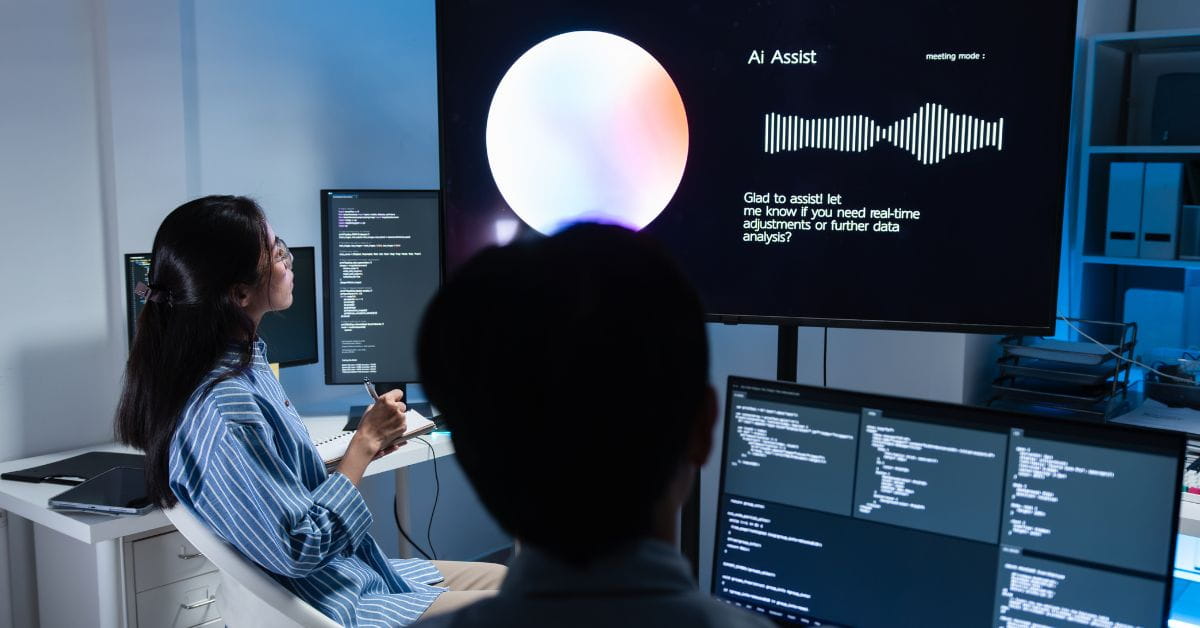
AI can additionally assist paediatricians with routine administrative tasks. Further, AI-powered documentation tools and generative AI can help with the following tasks:
- Writing clinical notes
- Condensing medical data
- Keeping documentation organized
- Encouraging dialogue
- Assisting medical professionals in finding pertinent information
Assisting with Critical and Neonatal Care
In newborn and pediatric intensive care, where doctors may need to continuously monitor a variety of variables, AI offers special potential. AI is capable of examining clinical data streams to find signs linked to problems or decline.
Applications in neonatal difficulties, respiratory disorders, newborn resuscitation, and other high-acuity scenarios are currently being studied. When a child's condition starts to change, these technologies may potentially enable quicker reactions.
Improving Pediatric Research and Drug Development
Researchers use AI to evaluate complicated data, spot signs in diseases, investigate possible therapeutic targets, and speed up some stages of drug discovery. This could be especially helpful in the field of paediatrics, where studies involving children may encounter ethical and practical issues.
While creating novel theories for pediatric illnesses and therapies, AI may help researchers make better use of the data that is already accessible. Medications in pediatric development and research are key areas for the future of AI in child health, according to recent evaluations.
What Are the Benefits of Artificial Intelligence in Pediatric Healthcare?
AI could have multiple advantages if it is properly developed and clinically proven.
- Early detection: AI can identify troubling trends before they become apparent.
- Improved decision support: When assessing complicated cases, paediatricians can obtain more data-driven insights.
- Personalized care: AI can help detect several factors that are pertinent to the health of a specific child.
- Increased productivity: Automation can cut down on tedious administrative and documentation work.
- Continuous monitoring: In suitable clinical settings, AI can evaluate evolving health data in real time.
- Research acceleration: AI can help scientists study massive databases and find novel pediatric medical opportunities.
What are the Risks?
AI also presents some level of difficulty.
Security and privacy: Information on children's health is very delicate and needs to be managed wisely.
Bias: For some populations, AI trained on incomplete or unrepresentative datasets may yield less reliable conclusions.
Limited pediatric data: The physiology and circumstances of children may not be well reflected in AI systems, and these are primarily built using adult data.
Inaccurate or deceptive results: Convincing but false information can be produced using generative AI.
Overreliance: Medical professionals could rely too much on computerized suggestions.
These factors necessitate thorough validation, openness, privacy protections, and continuous human supervision for the use of AI in pediatric care.
Artificial Intelligence's Future in Pediatric Healthcare
Simply put, the future of AI in children's health is probably going to feature paediatricians working together with intelligent technologies. More advanced real-time monitoring, individualized risk prediction, and decision support might be offered by future technology.
And, technologies like digital twins and sophisticated predictive models that may ultimately aid in simulating the course of a disease and the effects of treatment are being studied by researchers.
Child specialists will continue to be crucial for comprehending context, interacting with families, taking developmental needs into account, and making effective clinical choices.
Final Words
Children's health and artificial intelligence will share a more promising connection. AI gives paediatricians new ways for information analysis, clinical work streamlining, diagnosis help, patient monitoring, personalized care, and more.
To get the best clinical care for your little ones, you might get in touch with Dr. Manish Madhav, a highly reputed paediatric surgeon.
FAQs
How is AI used in paediatric healthcare?
Mostly, AI can support diagnosis, medical imaging, clinical recording, risk assessment, patient monitoring, developmental screening, and clinical decision-making.
Can AI replace the need for paediatricians?
While AI can assist pediatricians, it cannot take the place of the clinical decisions made by humans, physical examination, communication, and empathy essential to the treatment of children.
How might AI enhance the health of kids?
AI may assist doctors with early pattern recognition, effective health child information analysis, patient monitoring, personalized pediatric care, less administrative burden, et al.
Is AI safe for children?
When properly developed, verified, monitored, and applied under suitable therapeutic supervision, AI tends to be beneficial in child care.
Can parents diagnose their child's condition using AI?
Health data produced by AI may be inaccurate or lacking; thus, a pediatrician with training should assess symptoms and offer medical guidance.